When a tree is removed from a garden, many homeowners assume the job is finished the moment the trunk is cut down. Yet what remains beneath the surface often tells a different story. Tree stumps may appear lifeless, but in some cases they retain the ability to produce new growth long after the tree itself has been felled.
This raises an important question for property owners throughout Ferndown, Bournemouth, Poole, Wimborne, and Broadstone. Can tree stumps grow back after removal?
The answer is yes, certain species can regenerate if the stump and root system remain alive. Understanding why this happens and how to prevent it is essential for maintaining a safe, attractive, and manageable outdoor space.
Can Tree Stumps Grow Back After Removal?
Trees are remarkably resilient organisms. Long after the trunk has been removed, the roots beneath the soil can continue to store energy and nutrients. In certain species, this reserve allows the tree to attempt regeneration by producing new shoots from dormant buds located within the stump or root system.
These shoots often emerge around the edge of the stump or from roots several metres away from the original tree. While the growth may initially appear insignificant, it can quickly develop into a recurring maintenance problem.
Several factors influence whether a stump is likely to regrow.
Tree Species
Some species possess a much stronger natural ability to regenerate than others. Fast growing trees often have extensive root systems capable of supporting new growth after felling.
Health of the Root System
A healthy root network remains capable of transporting moisture and nutrients. The healthier the roots, the greater the chance of regrowth.
Age of the Tree
Younger trees typically regenerate more readily than mature specimens because they possess greater vigour and resilience.
Method of Removal
Simply cutting a tree down leaves much of the living structure intact. Professional stump grinding is considerably more effective at preventing future growth.
Which Tree Species Are Most Likely to Regrow?
Certain trees commonly found throughout Dorset are particularly persistent when it comes to regeneration.
Willow
Willow trees are famous for their remarkable ability to regenerate. Even small fragments of living wood can sometimes produce new growth.
Poplar
Poplars frequently generate root suckers that emerge well beyond the original stump. These can continue appearing for years if the root system remains active.
Sycamore
Sycamore trees are highly adaptable and often produce vigorous regrowth after being cut down.
Elm
Elm trees commonly respond to felling by sending up multiple shoots from the stump, creating dense clusters of new growth.
Ash
Although many ash trees have been affected by ash dieback in recent years, healthy specimens still possess a strong capacity for regeneration.
What Happens If You Leave a Tree Stump Untreated?
While leaving a stump in place may seem harmless, it can lead to several practical issues.
Unwanted Regrowth
The most obvious concern is the appearance of new shoots. Repeated cutting may become necessary to keep growth under control.
Pest Activity
Decaying timber attracts a variety of insects, including beetles and ants. Over time, these pests may spread to other areas of the garden.
Fungal Development
Rotting stumps provide ideal conditions for fungal growth. Certain fungi can affect surrounding plants and trees.
Trip Hazards
Stumps can present a significant hazard, particularly in gardens used by children or elderly family members.
Reduced Garden Space
A remaining stump often limits landscaping opportunities and makes routine lawn maintenance more difficult.
Root Related Problems
In some circumstances, surviving roots may interfere with paving, driveways, and underground services.
Stump Grinding Versus Complete Stump Removal
Homeowners often wonder whether stump grinding or full stump removal represents the better solution.
Stump Grinding
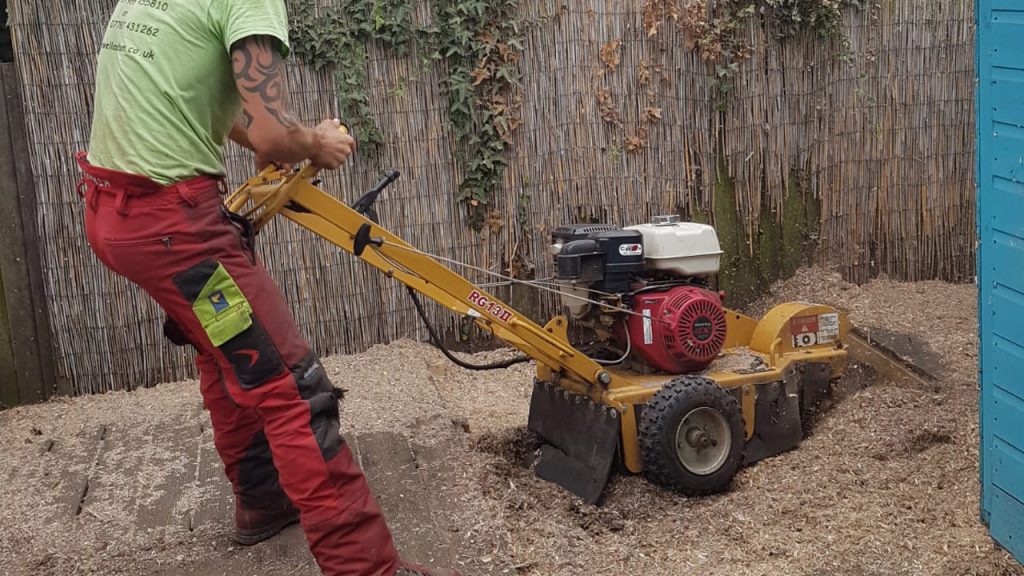
Stump grinding involves mechanically reducing the stump below ground level using specialist equipment.
Benefits include:
- Less disruption to the garden
- Faster completion times
- Cost effective removal
- Excellent prevention of regrowth
- Suitable for most residential properties
For the vast majority of homeowners, stump grinding provides an efficient and practical solution.
Complete Stump Removal
This method involves excavating the entire stump and root ball.
Benefits include:
- Removes all visible remains
- Suitable for construction projects
- Eliminates large root structures
However, complete removal often causes greater disruption to the surrounding landscape and is typically more expensive.
How Professional Tree Surgeons Prevent Stump Regrowth
Professional tree surgeons use specialist techniques designed to eliminate the conditions required for regeneration.
Precision Stump Grinding
Modern stump grinders remove the active growth tissue within the stump, making regrowth highly unlikely.
Root Management
Where necessary, tree surgeons can address problematic root systems to reduce the possibility of future shoots appearing.
Specialist Equipment
Professional machinery enables deeper and more thorough stump removal than most domestic alternatives.
Expert Assessment
Every tree species behaves differently. Experienced tree surgeons can identify the most appropriate treatment based on the species, location, and condition of the stump.
Signs Your Tree Stump Is Starting to Regrow
Recognising early signs of regeneration allows homeowners to take action before the problem escalates.
Common indicators include:
- Fresh green shoots emerging from the stump
- Small saplings appearing nearby
- New leaves developing around exposed roots
- Clusters of vigorous stems around the stump perimeter
If you notice any of these signs, professional intervention may prevent further spread.
Why Trust Hanwell Tree Care?
At Hanwell Tree Care, we understand the unique challenges faced by property owners throughout Ferndown, Bournemouth, Poole, Wimborne, and Broadstone.
Our experienced tree surgeons provide professional stump grinding, tree removal, crown reduction, hedge trimming, site clearance, commercial tree services, and emergency tree work using modern equipment and proven techniques.
Every project is approached with care, professionalism, and a commitment to delivering lasting results. Whether you require a single stump removed from a domestic garden or comprehensive tree management for a commercial site, our team offers reliable solutions tailored to your requirements.
People Also Ask
How long does it take for a tree stump to stop growing?
This depends on the species and health of the root system. Some stumps cease activity within months, while others may continue producing shoots for several years.
Can roots continue to grow after a tree is cut down?
Most roots gradually decline after felling, but living roots can continue supporting new shoots for a period of time.
Is stump grinding enough to prevent regrowth?
In most cases, yes. Professional stump grinding removes the active tissue responsible for regeneration.
What is the fastest way to kill a tree stump?
Professional stump grinding is generally the quickest and most reliable method.
Do all tree species regrow from stumps?
No. Some species possess a much stronger regenerative capacity than others.
Is it better to remove a stump or leave it in the ground?
Removal is usually recommended to prevent regrowth, eliminate hazards, and improve the appearance of the garden.
Frequently Asked Questions
Will stump grinding remove all roots?
No, but it removes the stump itself and significantly reduces the likelihood of regrowth.
Can a tree grow back after stump grinding?
Regrowth is uncommon when stump grinding is carried out correctly by experienced professionals.
How deep should a stump be ground?
Most domestic stumps are ground well below surface level to allow replanting or turfing.
Is stump grinding messy?
Professional tree surgeons take steps to minimise disruption and clear debris upon completion.
Can I plant over a ground stump?
Yes. Once the area has settled, many homeowners choose to replant or lay turf.
How much does stump grinding cost?
Costs vary depending on the size, species, and accessibility of the stump.
Conclusion
Although many people assume a felled tree is gone forever, certain species can continue growing from the remaining stump and roots. Left untreated, these stumps may produce unwanted shoots, attract pests, and create ongoing maintenance issues.
Professional stump grinding remains one of the most effective methods of preventing regrowth while restoring the appearance and usability of your garden.
If you are dealing with an unwanted stump in Ferndown, Bournemouth, Poole, Wimborne, or Broadstone, contact Hanwell Tree Care today. Our experienced tree surgeons provide expert stump removal and tree care services designed to keep your outdoor space safe, attractive, and free from recurring problems.