Trees bring grace, character, and lasting beauty to a property, yet they require careful attention if they are to remain healthy and safe for years to come. One of the most common questions asked by homeowners throughout Poole, Wimborne, and the wider Dorset area is how often trees should actually be professionally pruned.
The answer depends upon several important factors, including the species of tree, its age, its location, and its overall condition. A mature oak standing proudly at the edge of a garden will require a very different approach from a young ornamental cherry tree beside a driveway. Professional pruning is not simply about appearance. It plays a central role in tree health, structural integrity, public safety, and the long term vitality of the landscape.
At Hanwell Tree Care, we regularly help homeowners and businesses across Dorset maintain trees through careful, knowledgeable pruning that respects both the tree and its surroundings. Understanding the correct pruning schedule can prevent disease, reduce storm damage, and help trees flourish naturally.
Why Professional Tree Pruning Matters
Many people assume pruning is little more than cutting back overgrown branches. In reality, it is a highly skilled aspect of tree surgery that requires knowledge of tree biology, seasonal growth patterns, and structural balance.
Proper pruning helps to:
- Remove dangerous or weakened limbs
- Encourage healthy growth
- Improve airflow through the canopy
- Reduce the risk of disease
- Prevent branches from damaging buildings or power lines
- Improve the appearance of the tree
- Extend the lifespan of the tree
In coastal areas such as Poole and surrounding parts of Dorset, strong winds and seasonal storms can place considerable strain upon neglected trees. Weak or overcrowded branches become particularly vulnerable during poor weather. Professional tree pruning helps reduce these risks while preserving the natural form of the tree.
How Often Should Trees Be Pruned?
There is no universal timetable suitable for every species. However, there are general guidelines that apply to most domestic and commercial trees.
Young Trees
Young trees usually benefit from pruning every two to three years.
At this stage, pruning focuses on shaping the structure of the tree and encouraging strong branch development. Correct formative pruning during the early years can prevent expensive structural issues later in life.
A poorly shaped young tree may eventually develop weak branch unions, uneven growth, or excessive weight distribution, all of which can create future hazards.
Mature Trees
Established mature trees generally require pruning every three to five years.
The goal at this stage is maintenance rather than shaping. Professional pruning helps remove deadwood, thin congested areas, and reduce stress upon heavier limbs.
Certain species grow more vigorously than others. Fast growing trees may require more regular attention, particularly where branches begin to overhang roads, neighbouring properties, or public footpaths.
Fruit Trees
Fruit trees often require annual pruning.
Regular pruning encourages healthy fruit production, improves sunlight penetration, and helps maintain airflow through the canopy. Without proper maintenance, fruit trees can quickly become overcrowded and less productive.
Apple and pear trees are commonly pruned during winter dormancy, while stone fruit trees are often pruned during summer to reduce disease risk.
Ornamental Trees
Ornamental species typically benefit from pruning every three to five years, depending upon their growth habits.
These trees are often chosen for their visual appeal, meaning pruning must be undertaken with particular care to preserve their natural shape and elegance.
Evergreen Trees
Evergreens generally require less frequent pruning.
In many cases, pruning every four to six years is sufficient unless there is storm damage, disease, or excessive growth affecting nearby structures.
Signs Your Tree Needs Professional Pruning
Trees often display clear warning signs when pruning is overdue. Ignoring these symptoms can eventually lead to safety concerns or declining tree health.
You may need professional tree pruning if you notice:
- Dead or hanging branches
- Dense overcrowded growth
- Branches rubbing together
- Reduced sunlight reaching the garden
- Branches touching buildings or roofs
- Storm damaged limbs
- Signs of disease or fungal growth
- Unbalanced or leaning growth
- Excessive debris falling from the tree
If you are uncertain whether pruning is necessary, a professional tree inspection can provide clarity before problems become more serious.
The Best Time of Year for Tree Pruning
Timing matters greatly when it comes to tree care.
Most deciduous trees are best pruned during late winter or early spring while dormant. During this period, trees experience less stress and are better able to recover once new growth begins.
However, there are important exceptions.
Certain species, including birch and maple, may bleed sap heavily if pruned at the wrong time of year. Flowering trees also require careful timing to avoid removing developing buds.
In Dorset, winter storms can expose damaged branches that require urgent attention. Emergency tree work is sometimes necessary following severe weather to prevent further hazards.
Professional tree surgeons understand the seasonal requirements of individual species and can recommend the safest and most effective pruning schedule.
Why DIY Tree Pruning Can Be Risky
Tree pruning may appear straightforward, yet it can quickly become dangerous without proper training and equipment.
Incorrect cuts can leave trees vulnerable to disease, decay, and structural weakness. Over pruning may place the tree under severe stress, while poor technique can permanently damage its natural growth pattern.
There are also serious safety concerns involved.
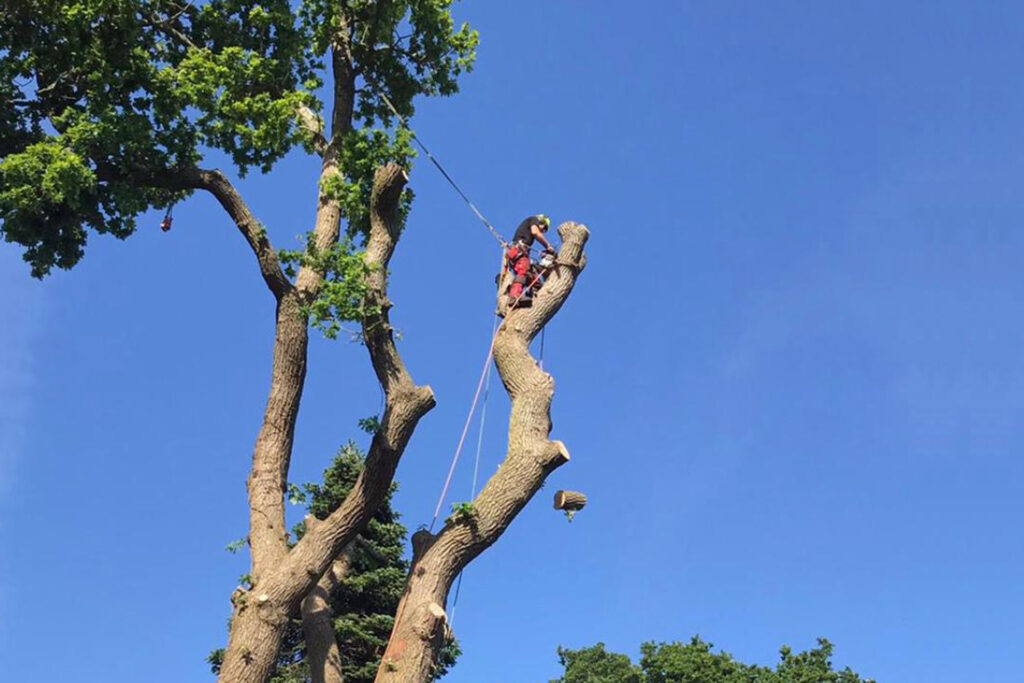
Working at height with chainsaws and heavy branches presents obvious risks, particularly around unstable limbs or confined spaces. Every year, homeowners suffer injuries attempting tree work without professional assistance.
Qualified tree surgeons use specialist climbing equipment, safety systems, and industry approved pruning methods to complete work safely and correctly.
Crown Reduction and Crown Thinning
Two of the most commonly requested tree services across Poole and Wimborne are crown reduction and crown thinning.
Crown Reduction
Crown reduction involves carefully reducing the overall size of the tree canopy while preserving its natural appearance.
This service is often used when trees become too large for their surroundings or begin affecting neighbouring properties.
Crown Thinning
Crown thinning focuses on selectively removing smaller branches throughout the canopy.
This improves airflow and allows more natural light to pass through the tree while reducing wind resistance during storms.
Both techniques require precision and experience to avoid harming the long term health of the tree.
Tree Pruning and Property Safety
Neglected trees can create significant risks for homes and commercial premises.
Overgrown limbs may interfere with roofs, chimneys, fences, and utility lines. In severe weather, weakened branches can fall unexpectedly, causing costly damage or injury.
Regular professional pruning reduces these risks while helping maintain a safer outdoor environment.
For landlords and commercial property owners, routine tree maintenance is particularly important. Trees located near car parks, public walkways, schools, and commercial buildings should be inspected and maintained regularly to minimise liability risks.
Local Tree Care in Poole and Wimborne
Trees growing in Dorset face unique environmental pressures.
Coastal winds, salt exposure, and seasonal storms can place additional stress upon certain species. Sandy soils found in some parts of Poole may also affect root stability and moisture retention.
Professional local tree surgeons understand these regional conditions and can tailor pruning methods accordingly.
At Hanwell Tree Care, we work with a wide range of native and ornamental species throughout Poole, Wimborne, and the surrounding Dorset area. Our approach combines careful pruning techniques with practical local knowledge to help trees remain healthy, balanced, and resilient.
Additional Tree Services
Alongside professional tree pruning, Hanwell Tree Care also provides:
- Tree removal
- Hedge trimming
- Stump grinding
- Deadwood removal
- Emergency tree work
- Tree inspections
- Commercial tree services
- Residential tree surgery
Each service is carried out with close attention to safety, workmanship, and long term tree health.
When Should You Contact a Professional Tree Surgeon?
It is wise to arrange a professional inspection if:
- A tree has not been pruned for several years
- Branches appear unstable
- You notice signs of disease
- Growth is affecting nearby structures
- A recent storm has caused damage
- The tree appears unbalanced
- You are planning landscaping work nearby
Early intervention often prevents more extensive and expensive problems later.
Conclusion
Professional tree pruning is not merely about tidiness. It is an essential part of responsible tree care that protects both the health of the tree and the safety of the surrounding property.
While pruning schedules vary according to species and conditions, most trees benefit from regular professional attention every few years. Younger trees may require more frequent shaping, while mature specimens often need periodic maintenance to remain safe and healthy.
For homeowners and businesses across Poole, Wimborne, and Dorset, investing in professional tree care helps preserve the beauty, safety, and longevity of the landscape.
If you are unsure whether your trees require pruning, Hanwell Tree Care can provide expert guidance tailored to your property and the specific needs of your trees.
Contact Hanwell Tree Care
Whether you require crown reduction, tree pruning, hedge trimming, or emergency tree work, Hanwell Tree Care provides trusted professional tree services across Poole, Wimborne, and surrounding areas.
Contact our friendly team today for expert advice or a free quotation.
FAQs
How do I know if my tree needs pruning?
Dead branches, overcrowded growth, poor shape, storm damage, and branches touching structures are all signs that pruning may be necessary.
Can pruning improve tree health?
Yes. Proper pruning removes diseased or damaged growth and encourages healthier development throughout the tree.
Is winter the best time for tree pruning?
For many species, yes. Winter pruning is often ideal because trees are dormant and recover more effectively in spring.
How much does professional tree pruning cost?
Costs vary depending upon the size of the tree, accessibility, and the extent of work required.
Can pruning prevent storm damage?
Professional pruning can reduce wind resistance and remove weakened limbs, helping reduce storm related risks.
Should large trees always be professionally pruned?
Yes. Large trees should only be handled by qualified professionals with the correct equipment and training.