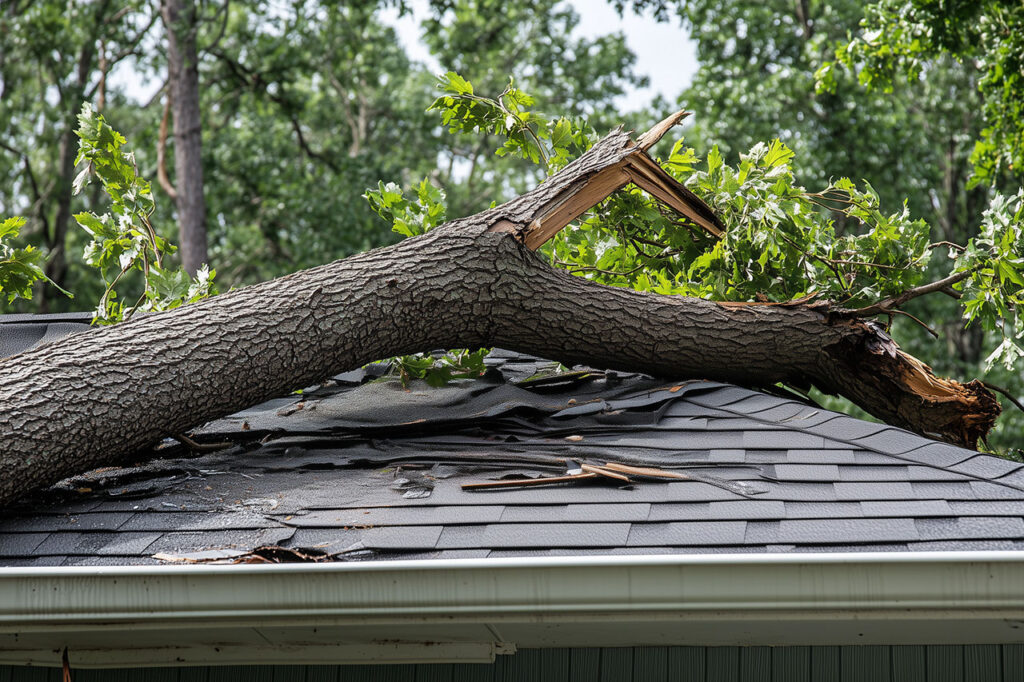
Severe storms are becoming increasingly common across Dorset, bringing heavy rain, strong winds and unexpected damage to gardens, homes and commercial properties. While fallen fences and damaged roofs are often obvious concerns, storm-damaged trees can present some of the greatest risks. A tree that appears to be standing normally may have hidden structural weaknesses, making it dangerous to approach.
Whether you’re dealing with snapped branches, a leaning tree or a completely uprooted specimen, acting quickly and safely is essential. Attempting to deal with storm damage yourself can place you, your family and neighbouring properties at risk. Knowing what steps to take immediately after a storm can help protect people, minimise property damage and potentially save a tree before the damage becomes irreversible.
At Hanwell Tree Care, our experienced tree surgeons provide emergency tree work throughout Bournemouth, Poole, Ferndown, Wimborne, Broadstone and the wider Dorset area. In this guide, we’ll explain exactly what you should do after storm damage, when to call a professional emergency tree surgeon and how regular tree maintenance can reduce future risks.
Need urgent help after a storm? Hanwell Tree Care offers fast emergency tree work across Dorset to safely assess, secure and remove dangerous trees before they cause further damage.
If a storm damages your tree, stay away from it, assess the area from a safe distance, photograph the damage for insurance purposes and contact a qualified emergency tree surgeon immediately. Never attempt to remove large branches or unstable trees yourself, as hidden structural damage can make them extremely dangerous.
Why Storm-Damaged Trees Are So Dangerous
Storm damage isn’t always obvious. Even trees that remain standing may have suffered serious structural damage that makes them unstable.
Professional tree surgeons regularly encounter hidden issues such as:
- Cracked or split trunks
- Broken structural limbs
- Hanging branches (often called widowmakers)
- Uprooted or partially lifted root systems
- Internal decay exposed by storm damage
- Trees leaning dangerously towards buildings or roads
High winds can twist the trunk, weaken major limbs and disturb the root plate without causing immediate collapse. In some cases, a tree may fail hours or even days after the storm has passed.
This delayed failure is one of the biggest reasons homeowners should avoid approaching a damaged tree.
Hidden Damage Isn’t Always Visible
One of the most common misconceptions is that if a tree is still standing, it must be safe.
Unfortunately, that’s rarely the case.
Storms place enormous stress on a tree’s structure. While leaves and smaller branches may hide the damage, professional inspection often reveals:
- Internal splitting
- Stress fractures
- Compromised branch unions
- Root movement beneath the soil
- Dangerous tension within damaged limbs
Without specialist equipment and training, these defects can be impossible to identify.
Immediate Steps to Take After Storm Damage
Acting quickly but safely is essential.
1. Stay Well Away from the Tree
Your first priority should always be personal safety.
Do not stand underneath damaged branches or attempt to inspect the tree closely.
Large limbs can fall without warning, particularly if they remain under tension after high winds.
If the tree is close to:
- Your house
- A public road
- A footpath
- Children’s play areas
- Power lines
Keep everyone away until it has been professionally assessed.
2. Check for Immediate Hazards
From a safe distance, look for obvious dangers such as:
- Hanging branches
- Split trunks
- Leaning trees
- Uprooted roots
- Branches resting on buildings
- Fallen trees blocking access
Never attempt to move large branches yourself.
3. Photograph the Damage
Take photographs from several safe angles.
These images can help:
- Your insurance provider
- Your tree surgeon
- Any future reports or claims
Include:
- The whole tree
- Close-ups of damage
- Nearby buildings
- Vehicles
- Fences
- Any visible impact areas
4. Contact Your Insurance Company
Many home insurance policies provide cover for storm-related tree damage when property has been affected.
Your insurer may ask for:
- Photographs
- Quotes
- Professional reports
- Emergency invoices
Keeping good records can speed up your claim.
5. Call an Emergency Tree Surgeon
If the tree presents any risk whatsoever, contact a qualified emergency tree surgeon immediately.
Professional emergency tree work may include:
- Making dangerous branches safe
- Emergency pruning
- Controlled dismantling
- Tree removal
- Site clearance
- Stump grinding where required
Fast action often prevents further property damage and reduces long-term repair costs.
Hanwell Tree Care provides rapid emergency tree services throughout Bournemouth, Poole and the surrounding Dorset area, helping homeowners and businesses respond safely after severe weather.
What You Should Never Attempt Yourself
When faced with storm damage, it’s understandable to want to tidy up the garden immediately. However, this is where many accidents occur.
Avoid attempting to:
Climb a Damaged Tree
Storm-damaged trees are unpredictable.
Branches that appear secure may snap without warning.
Use a Chainsaw Without Training
Chainsaws are dangerous at the best of times.
When combined with unstable timber, tensioned branches and poor footing, the risks increase dramatically.
Remove Hanging Branches
Broken limbs often remain suspended high in the canopy.
These can fall suddenly with little or no warning.
Professional arborists use specialist climbing techniques, rigging equipment and elevated platforms to remove them safely.
Work Near Overhead Power Lines
If branches are touching electrical cables, stay well away and contact the relevant utility provider immediately.
Never attempt to remove branches from overhead lines.
Ignore a Leaning Tree
A tree that has begun leaning after a storm should always be professionally inspected.
Even a slight change in angle can indicate significant root failure beneath the ground.
Common Mistakes Homeowners Make
Following a storm, it’s easy to underestimate the seriousness of tree damage. Some of the most common mistakes include:
- Assuming the tree is safe because it is still standing.
- Clearing debris before checking for overhead hazards.
- Parking vehicles beneath damaged branches.
- Delaying an inspection in the hope the problem will resolve itself.
- Hiring uninsured contractors offering cheap emergency services.
- Attempting DIY tree removal with ladders or chainsaws.
Each of these mistakes can increase the risk of injury or further property damage. A professional assessment is always the safest course of action.
Can a Storm-Damaged Tree Be Saved?
Not every storm-damaged tree needs to be removed. In many cases, prompt attention from a qualified tree surgeon can preserve the tree while making it safe for the surrounding area. The extent of the damage, the species of tree, its age and overall health will all influence the recommended course of action.
During an inspection, a professional arborist will assess whether the tree has retained enough structural integrity to recover. Trees with minor branch damage or isolated limb failures can often be restored through careful pruning, crown reduction or crown thinning. These techniques reduce the weight placed on weakened branches while encouraging healthy new growth.
However, if the damage extends to the trunk or root system, the likelihood of successful recovery decreases significantly. A tree with extensive structural damage may continue to deteriorate over time, presenting an ongoing safety risk. The aim is always to balance public safety with preserving healthy trees wherever possible.
Featured Snippet: A storm-damaged tree can often be saved if the damage is limited to branches rather than the trunk or roots. A qualified tree surgeon can assess its condition and recommend pruning, crown reduction or removal depending on the level of risk.
When Does a Tree Need Removing?
Although preserving trees is always preferable, some situations require complete removal to protect people and property.
A tree is more likely to require removal if it has:
- Split or fractured through the main trunk.
- Uprooted or suffered major root failure.
- Developed a significant lean following the storm.
- Large structural limbs that cannot be safely retained.
- Extensive decay exposed by storm damage.
- Become unstable near buildings, roads or public footpaths.
Removing a dangerous tree should never be viewed as a failure. Instead, it is often the safest and most responsible option, particularly when the tree poses an immediate risk.
How Professional Tree Surgeons Assess Storm Damage
Storm damage assessments involve much more than a quick visual inspection. Experienced tree surgeons use recognised arboricultural assessment techniques to determine the safest course of action.
The inspection typically includes checking:
- Root stability and soil movement.
- Cracks or cavities within the trunk.
- Structural branch unions.
- Dead or hanging limbs.
- Signs of internal decay.
- Nearby buildings, roads and public access routes.
- Wildlife habitats and nesting activity.
- Whether Tree Preservation Orders or conservation area restrictions apply.
Using specialist equipment allows tree surgeons to identify hidden defects that are not visible from ground level, ensuring the correct decision is made for both safety and long-term tree health.
Hanwell Tree Care’s Emergency Tree Work Process
When you contact Hanwell Tree Care following storm damage, our priority is making the area safe as quickly as possible.
The process begins with an emergency call-out, where one of our experienced tree surgeons assesses the immediate risks. If the tree presents a danger to people or property, emergency measures are taken to secure the area before any work begins.
Once the site is safe, we carry out a detailed inspection and recommend the most appropriate solution. This may involve removing dangerous branches, reducing the canopy to relieve stress, dismantling unstable sections or removing the tree completely where necessary.
After the work is completed, all debris is cleared from site, leaving your property clean and safe. If required, we can also carry out stump grinding to prepare the area for replanting or landscaping.
Our team provides emergency tree work throughout Bournemouth, Poole, Ferndown, Wimborne, Broadstone and the surrounding Dorset area, responding quickly when homeowners and businesses need professional assistance.
Does Home Insurance Cover Storm-Damaged Trees?
Many homeowners are unsure whether their insurance policy covers storm-damaged trees. While every policy differs, most UK home insurance providers will consider claims where a fallen tree has damaged an insured building, garage, fence or other structure.
If the tree has simply fallen within your garden without causing damage, removal costs may not always be covered. This is one reason why it’s important to review your policy and notify your insurer as soon as possible after a storm.
Taking photographs, recording the date of the incident and obtaining a professional inspection report can all help support your claim.
How Regular Tree Maintenance Prevents Storm Damage
Although no tree can be made completely storm-proof, regular maintenance dramatically reduces the likelihood of serious damage.
Routine inspections allow tree surgeons to identify weak limbs, disease and structural defects before severe weather exposes them. Preventative work such as crown reduction, crown thinning and deadwood removal reduces wind resistance while improving the tree’s overall health.
Regular hedge trimming, pruning and general tree maintenance also minimise the risk of falling branches during high winds.
Investing in preventative tree care is often far more cost-effective than dealing with emergency tree removal following a storm.
Why Trust Hanwell Tree Care?
When storm damage strikes, choosing an experienced and reliable tree surgeon is essential.
Hanwell Tree Care has built a reputation throughout Bournemouth, Poole and the wider Dorset area for delivering safe, professional tree surgery services. Our fully insured team combines years of practical experience with modern equipment to provide efficient emergency tree work for both domestic and commercial clients.
We understand the urgency of storm-related call-outs and pride ourselves on responding quickly, assessing every situation carefully and carrying out work to the highest safety standards. Whether you require emergency tree removal, crown reduction, stump grinding or ongoing tree maintenance, you can rely on our knowledgeable team for honest advice and quality workmanship.
Frequently Asked Questions
Can a storm-damaged tree recover?
Yes. Many trees recover successfully if the damage is limited and professional remedial work is carried out quickly.
Should I remove broken branches immediately?
Only if they are small and can be removed safely from the ground. Larger or hanging branches should always be left to a professional tree surgeon.
How quickly should a damaged tree be inspected?
Ideally within 24 hours if the tree is close to buildings, roads or public areas.
Does insurance pay for fallen tree removal?
Policies vary, but many insurers provide cover when the tree has caused damage to insured property.
Conclusion
Storm-damaged trees should never be ignored. Even when damage appears minor, hidden structural defects can develop into serious hazards if left untreated. Acting quickly, keeping a safe distance and arranging a professional inspection are the best ways to protect your property and everyone around it.
Whether your tree requires emergency removal, careful pruning or simply a thorough safety assessment, Hanwell Tree Care is here to help. Our experienced tree surgeons provide reliable emergency tree work across Bournemouth, Poole, Ferndown, Wimborne, Broadstone and the wider Dorset area.
If you’ve recently experienced storm damage and need expert advice or urgent assistance, contact Hanwell Tree Care today for a prompt, professional response.